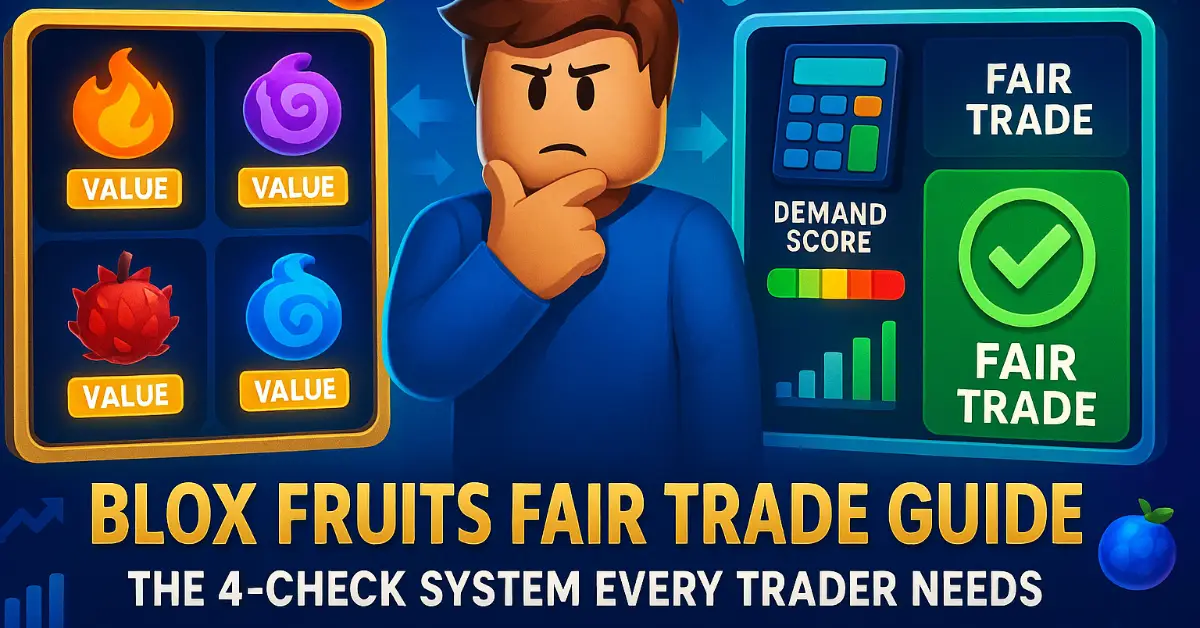
Someone just offered you a trade in Blox Fruits. You want to say yes but you want to be sure. Is it actually fair? Or are you about to give away more than you’re getting?
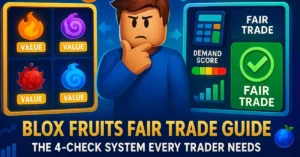
This fair trade guide gives you a complete 4-check system that removes the guesswork from every trade you make. By the end, you’ll have a repeatable process you can run in under two minutes on any offer, any time.
Why You Need a Trade Evaluation System
Blox Fruits doesn’t have an in-game price system. Roblox doesn’t tell you what any fruit is worth. That information gap is exactly where unfair trades and outright scams thrive. Players who don’t check values lose fruits they worked hours to earn. Using the community’s tools takes 60 seconds. Ignoring them can cost you days of grinding.
The 4-Check Fair Trade System
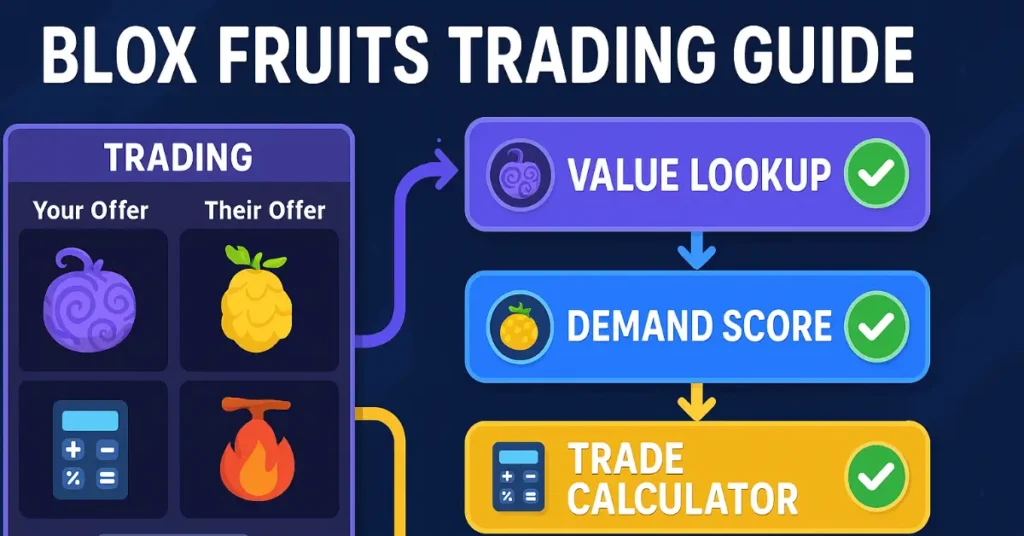
Check 1 Value Lookup
Before anything else, look up both items on a current community value list. Find a recently updated list — anything older than 2–3 weeks may be stale after a patch. Search both your item and their item. Write down the numbers. This gives you the raw foundation for every other check. Without it, you’re guessing. Check two different sources when the stakes are high. If both show similar numbers, you can feel confident in the data.
Check 2 Demand Scoring
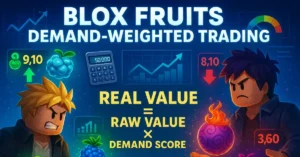
A fruit’s raw value and its actual trade power are two different things. A fruit can have a high number on the value list but almost no demand meaning nobody’s actively seeking it in trades right now. Demand is usually rated on a scale of 1–10:
- 9–10: Everyone wants it trades at or above full value
- 7–8: High interest trades smoothly at good value
- 5–6: Moderate may need to sweeten the deal
- 3–4: Low expect 70–80% of listed value
- 1–2: Almost no interest extremely hard to move
If you’re trading away a high-demand fruit for a low-demand fruit even one with the same raw number you’re making a practical loss. Check demand for both items before proceeding.
Check 3 Calculator Verdict
Now combine your value and demand data using a demand-weighted trade calculator. This tool adjusts each item’s effective value based on demand, then compares both sides and returns a verdict.
- Open a trusted Blox Fruits trade calculator (verify the update date)
- Enter every item you’re giving on your side
- Enter every item you’re receiving on their side
- Read the result: Win, Fair, or Loss
- Note the percentage 5% off is very different from 25% off
A Fair result typically means both sides are within 5–10% of equal value. For any result showing a Loss of more than 10%, negotiate or walk away.
Check 4 Scam Pattern Scan
Pressure tactics: This offer expires in 10 seconds or I have three other people interested. A fair trader will never rush you. Take your time always.
Fake hype: Someone claims their fruit is super rare right now or about to spike in value. Check the demand score yourself. Community data beats personal claims every time.
Last-second item swaps: Scammers rush through the confirmation screen hoping you won’t notice they removed an item at the last moment. Always count every item on both sides before clicking Accept every time, without exception.
Screenshot proof of value: Fake calculator screenshots are easy to fabricate. Run your own live check. Your two minutes is worth it.
Reading the Result and Making Your Decision
- Win (10%+ in your favor): You’re getting the better end. Accept if you want the item.
- Fair (within 5–10%): Clean, balanced trade. Safe to accept.
- Slight Loss (10–20% against you): You’re giving a little more. Negotiate or add conditions.
- Loss (20%+ against you): Clearly unfair. Counter-offer or walk away.
What to Do When a Trade Feels Borderline
- Counter-offer first. Add one small item to your side, or ask them to add one to theirs. Most genuine traders will engage with this.
- Ask in a trading Discord. Community members often know about value shifts before calculators are updated.
- Set a walk-away number. Decide your maximum acceptable loss before entering any trade and stick to it.
- Check if the item fits your build. A 10% loss for a fruit you’ll actively use is often better than holding a high-value fruit you’ll never touch.
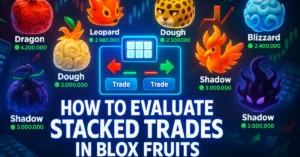
The System in Action: A Complete Example
Someone offers you their Kitsune for your Buddha plus a permanent Rumble.
Check 1: Kitsune approximately 12,000. Buddha approximately 6,000. Permanent Rumble approximately 5,000. Your side totals approximately 11,000.
Check 2: Kitsune demand 8/10. Buddha 6/10. Permanent Rumble 5/10. Kitsune is more in demand than both your items combined.
Check 3: Calculator returns Loss at -12%. The high demand on Kitsune pushes its effective value above the raw number.
Check 4: No pressure. No screenshots. No rushed confirmation. The trade feels genuine just the numbers being slightly off.
Decision: Counter-offer. Ask them to swap permanent Rumble for a smaller item. They agree. Re-run the calculator it now shows Fair. You accept the updated deal.
Frequently Asked Questions
How do you tell if a Blox Fruits trade is fair?
Run the 4-check system: look up both items on a current value list, check the demand score for each, run the full trade through a demand-weighted calculator, and scan for scam patterns like pressure or last-second swaps. If the calculator returns Fair or Win and nothing feels rushed, you’re good to proceed.
What is considered a fair trade in Blox Fruits?
A fair trade means both sides are within roughly 5–10% of equal value when demand is factored in. Neither player gives significantly more than they receive.
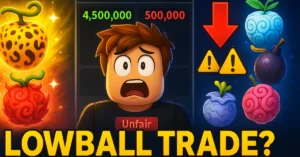
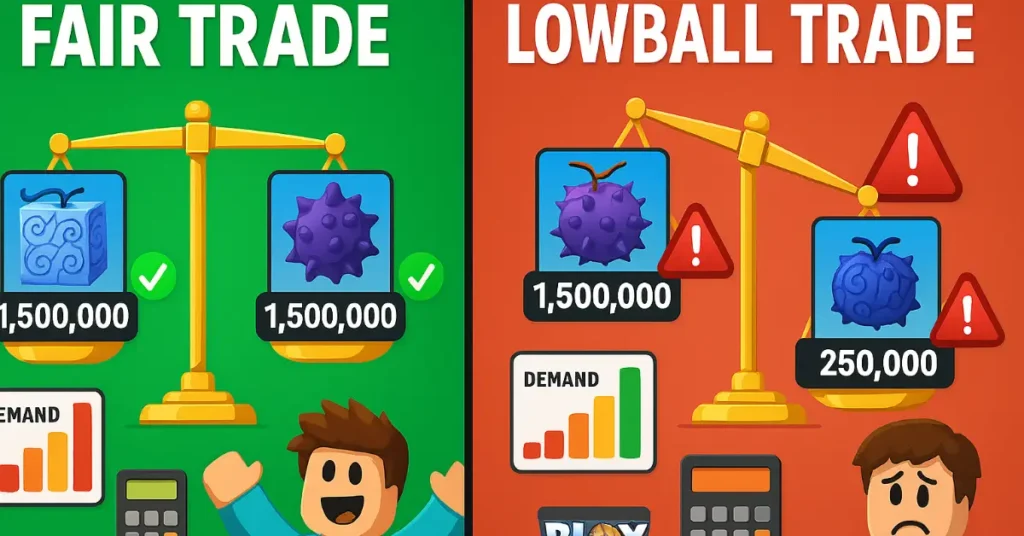
How do you spot a lowball in Blox Fruits?
A lowball is when someone offers you 30–50% or more below your item’s actual value. Running a demand-weighted calculator instantly exposes the gap and gives you the numbers to counter or walk away with confidence.
Can I trust a Blox Fruits trade calculator?
Yes, if it’s recently updated and demand-weighted. For large trades, cross-check two calculators and verify demand scores separately. Consistent results across tools are a strong signal of accuracy.
Is it bad to decline a trade offer?
Not at all. Declining an unfair offer is smart trading, not rudeness. Any legitimate trader will respect a polite counter-offer or a clear thanks but I’m looking for something closer to fair value. If someone reacts badly to a decline, that tells you something about their intentions.