Ever agreed to a stacked trade in Blox Fruits five or six fruits changing hands at once and then stared at the chat log wondering if you just got played? Multi-fruit trades are where most of the big mistakes happen, and most players don’t realize it until the deal is done.
This guide breaks down exactly how to evaluate those messy, multi-side offers. You’ll learn the math, the tools, and the mindset experienced traders use every single time.
What Is a Stacked Trade in Blox Fruits?
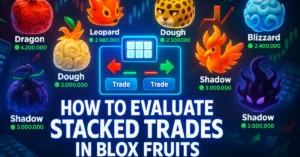
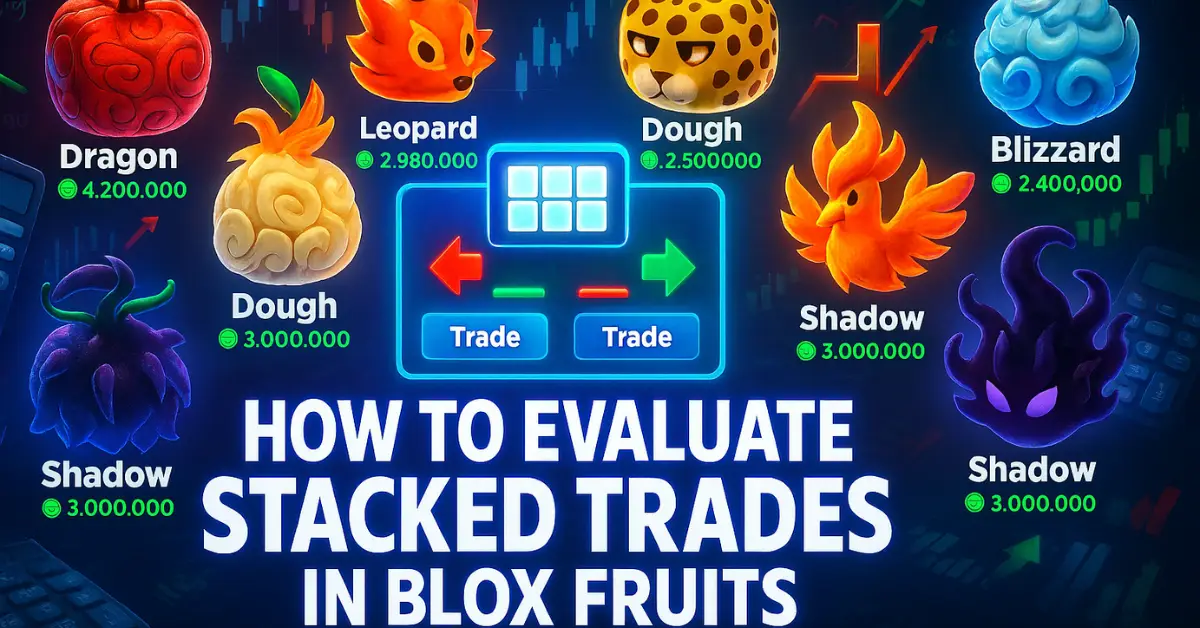
A stacked trade is any deal where one or both sides involve multiple fruits. Instead of a clean 1-for-1 swap, you might see something like: Dragon + Kitsune for Leopard + Dough + Phoenix. These trades are called stacked because the value is literally stacked across several items. The more fruits involved, the harder it is to know if both sides are actually fair.
Common Types of Stacked Trades
- 2-for-1 trades: Two lower fruits for one high-tier fruit
- 3-for-2 trades: Three mid-tier fruits swapped for two upper-tier ones
- 5+ fruit mega-trades: Full inventory trades, common in Discord trading servers
Why Stacked Trades Are So Hard to Evaluate
Individual fruit values are not just about gem price — demand matters just as much, sometimes more. A fruit worth 2,500 gems might have low demand because everyone already has it. That changes its real trade value completely. When you stack five or six fruits together, these tiny misreads on demand compound. One slightly overvalued fruit on your side, one undervalued fruit on their side, and suddenly you’re down the equivalent of an entire mid-tier fruit without realizing it.
Step-by-Step: Running the Stacked Trade Math
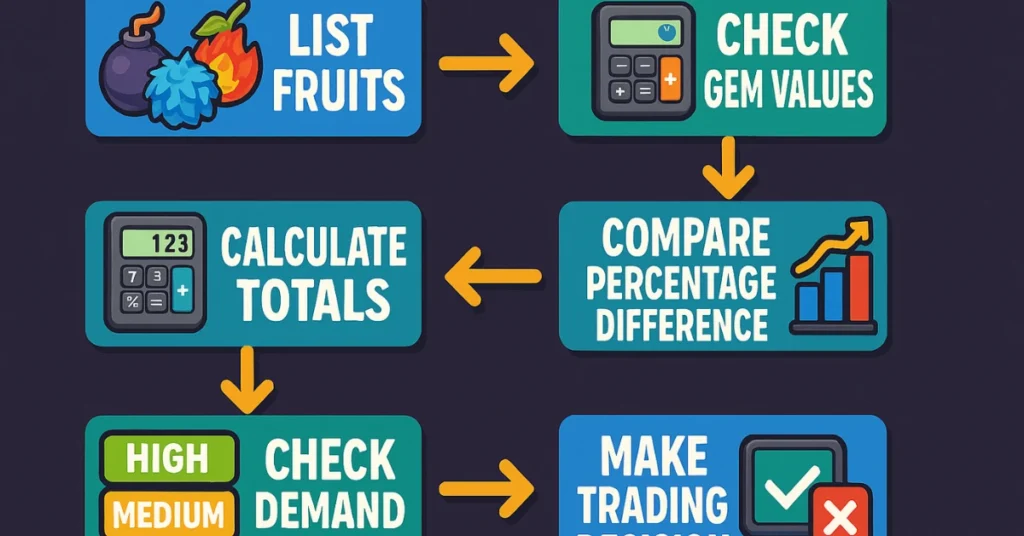
- List every fruit on both sides of the trade
- Look up each fruit’s current gem value in your preferred calculator
- Add up the total gem value for Side A (what you’re giving)
- Add up the total gem value for Side B (what you’re getting)
- Calculate the difference: (Side B minus Side A) divided by Side A times 100 = percentage gain or loss
- Check demand tier for every fruit a high-value fruit with low demand is hard to move
- Factor in any hard to find premium some fruits are rare even at low value
- Make your decision: aim for at least even value, ideally 5–10% in your favour
A 0% difference means break-even. Anything below -10% means you’re losing real value. Experienced traders usually won’t touch a deal below -5%.
Real Example: A 6-Fruit Stacked Trade Breakdown
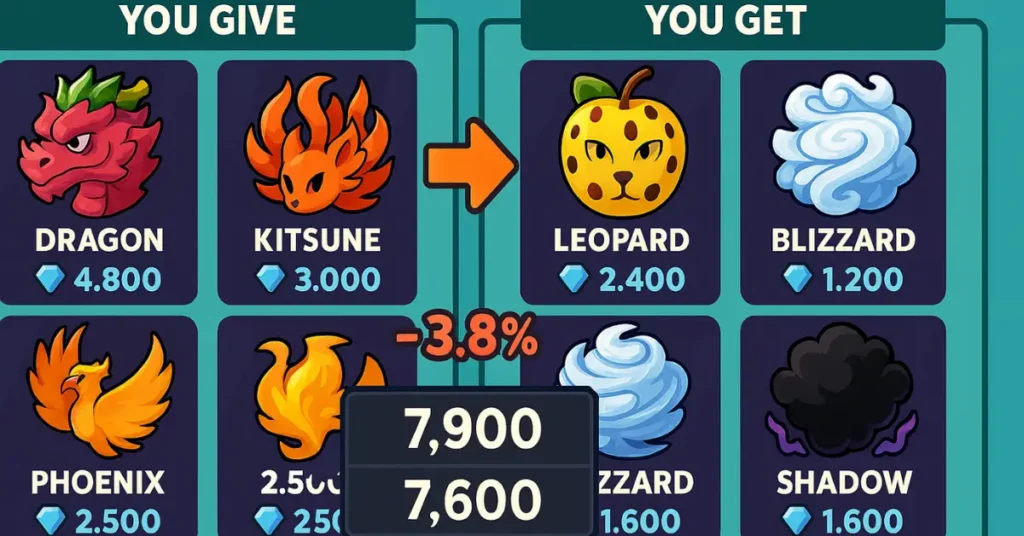
You Give: Dragon (3,500 gems) + Kitsune (2,800 gems) + Phoenix (1,600 gems) = 7,900 total
You Get: Leopard (3,200 gems) + Dough (2,100 gems) + Blizzard (900 gems) + Shadow (1,400 gems) = 7,600 total
At first glance, 7,900 vs 7,600 looks close just a 3.8% loss. But if Dragon currently has high demand and Leopard has medium demand, you’re not just losing 300 gems in raw value you’re also losing liquidity. Dragon trades faster. That’s an invisible cost most players forget to factor in.
Common Mistakes in Multi-Side Trading
1. Eyeballing It
Trying to estimate five or six fruit values in your head without a calculator is a recipe for loss. Even experienced traders use tools.
2. Ignoring Demand Tiers
A fruit worth 2,000 gems with low demand is worth less in practice than a fruit worth 1,800 gems with high demand. Demand is the multiplier nobody writes down.
3. Rushing
Stacked trades often come with pressure: This offer expires in 5 minutes. That’s a manipulation tactic. A real trader won’t rush you. Always take the time to run the numbers.
4. Not Checking for Value Updates
A fruit that was worth 1,500 gems last month might be worth 900 gems now because a new fruit dropped and shifted meta demand. Check for updates before big trades.
5. Only Checking One Calculator
Different calculators weight demand differently. Taking an average from two or three tools protects you from outlier data.
Pro Tips from Experienced Traders
- Screenshot the calculator values at the time of the trade. If there’s a dispute later, you have proof.
- For trades above 10,000 total gems, ask a trusted third party to review it. Most Discord servers have dedicated trade reviewers.
- Never accept a stacked trade where more than one fruit on the other side has low demand. Even if the gem value looks fair, you’ll struggle to move those fruits later.
Frequently Asked Questions
What is a stacked trade in Blox Fruits?
A stacked trade involves multiple fruits on one or both sides of a deal, instead of a simple 1-for-1 swap. For example, trading Dragon + Phoenix for Leopard + Dough would be a stacked trade.
Which calculator should I use for big trades?
The most reliable approach is to cross-reference two or three community calculators pinned in active Blox Fruits Discord trading servers. No single calculator is perfect comparing them gives you a more accurate gem value average.
How do I know if a stacked trade is fair?
Add up the total gem value for both sides using a current calculator. A difference of less than 5% is generally considered fair. Also check demand tiers a high-gem-value fruit with low demand is harder to trade and worth less in practice.
What does demand mean in Blox Fruits trading?
Demand reflects how many players actively want a specific fruit. High demand means the fruit trades quickly and holds value. Low demand means fewer buyers, which makes the fruit harder to move even if its gem value looks good on paper.